Right Kind of Roofing Material- Choosing The Right Kind of Roofing Material

When it comes to choosing the right kind of - roofing material for your home,there are several factors to consider. From the appearance and design of the roofing material to its long-term performance,each option has different characteristics that may appeal to you.

The most traditional type of roofing material is asphalt shingles,which have been used for decades. Asphalt shingles are relatively inexpensive,easy to install, and come in a variety of colors and textures that can match any homes style. They also require minimal maintenance over the years and can last up to 20 years with proper care.

Metal roofing is another option that is becoming increasingly popular due to its durability and long-term performance. This type of material typically lasts 50+ years and requires very little maintenance. Metal roofs are also highly energy-efficient as they reflect heat from the sun and keep your house cooler in the summer months. The downside to metal roofing is that it can be more expensive than other options depending on the quality you choose.

Tile roofing is a classic look that has been used for centuries. Tile roofs are extremely durable and can last up to 50 years if properly maintained. While they require more labor to install,the added durability and aesthetic of the tile make it worth the investment.

Finally,there are modern synthetic roofing options such as rubber shingles or PVC tiles that provide an alternative to traditional materials. These products offer protection from weather elements and come in several different styles,colors,and textures. They also have a longer lifespan than traditional materials (up to 30 years) and are much easier to maintain with regular cleaning.

Slate tiles are another option that has been used for centuries. Slate is a very durable material and can last up to 100 years with proper care. While slate roofs are more costly than other roofing materials,they offer an elegant look that will last for generations.,No matter which type of roofing material you choose,its important to consider the pros and cons of each option carefully before making a decision. Its also important to remember that while some types may be cheaper upfront,they might not provide the longevity or performance you need in the long run. Research each material thoroughly and consult a professional if necessary so you can make an informed decision about what kind of roofing is best for your home.,Roofing materials,Roofing materials come in a variety of shapes,sizes,colors,and textures. Asphalt shingles are the most commonly used roofing material due to their affordability and ease of installation. Asphalt shingles come in many different styles and can be found in various colors to match any homes exterior appearance. Asphalt shingles are also relatively maintenance-free and last approximately 20 years with proper care.

Metal roofing is becoming increasingly popular for its long-term performance and durability. Metal roofing usually lasts 50+ years and typically requires very little maintenance. Metal roofs also have the added benefit of being highly energy efficient as they reflect heat from the sun to keep homes cooler during summer months. The main drawback of metal roofing is that it can be more expensive depending on the quality chosen.

Tile roofing is another classic option that has been used for centuries due to its immense durability and aesthetically pleasing design options. Tile roofs require more labor to install but can last up to 50 years if properly maintained. While tile roofs are costlier than other types of roofing materials, their elegant look is worth the investment for many homeowners.,- Synthetic alternatives such as rubber shingles or PVC tiles offer an alternative to traditional materials while providing a high level of protection against weather elements. Synthetic materials are available in several different colors,textures,and styles,making it easy to find one that fits your home’s aesthetic appeal. These products also boast a longer lifespan (upwards of 30 years) compared to traditional materials and require minimal maintenance for upkeep over the years. Slate tiles are another impressive option when it comes to roofing materials due to their extreme durability which can last up to 100 years with proper care. While slate can be pricier than other materials,its classic look makes it a worthwhile investment for many homeowners looking for an elegant look that will last through generations.

No matter which type of roofing material you choose for your home,its important to carefully research each option before making a decision so you end up with the best product possible that suits your needs both aesthetically and functionally over time.,Asphalt Shingles,Asphalt shingles are a widely popular roofing material choice due to their affordability and ease of installation. Asphalt shingles come in a variety of styles,colors,and textures that can match any homes exterior. Installation is relatively simple as asphalt shingles can be applied by any do-it-yourselfer with some basic tools.

Asphalt shingles are also relatively maintenance-free when compared to other roofing materials and will last around 20 years with proper care and maintenance. They are designed to be durable against rain,snow,hail,and strong winds. In addition,asphalt shingles have superior fire resistance thanks to the granules embedded within them that provide an extra layer of protection from flames.

- Asphalt shingle roofs are also very energy efficient as they are designed to reflect heat from the sun to keep your home cooler in the summer months. This helps reduce energy bills as your air conditioning does not need to work as hard in order to keep your house cool during hot times of the year.,Overall,asphalt shingles provide an excellent long-term option for homeowners looking for an affordable roofing material that is easy to install and requires minimal maintenance over time. With a wide selection of colors and styles available,they can easily fit into any homes aesthetic while also providing superior protection from weather elements and fire hazards.

Metal Roofs,Metal roofing is becoming increasingly popular as a roofing material choice due to its long-term performance and durability. Metal roofs are made from durable materials such as aluminum,steel,copper,or zinc and come in several different colors,styles,and textures to fit any homes aesthetic. They can be installed easily and require minimal maintenance over time.,Metal roofs are designed to last much longer than other roofing materials such as asphalt shingles (which typically last 20 years) with many metal roofs lasting 50+ years with proper care. They are also highly resistant to weather elements such as snow,rain,hail,and strong winds. This makes them an ideal choice for homeowners looking for a long-lasting roof that will protect their homes from the elements for generations.

In addition to their durability,metal roofs are also highly energy efficient. The metals used in metal roofing reflect heat from the sun which helps keep homes cooler during the summer months and lowers energy bills by reducing the amount of energy needed to cool the house. This makes metal roofs an eco-friendly option that can save you money over time while also protecting your home from harsh weather conditions.

Overall,metal roofs provide homeowners with an excellent long-term option that offers superior protection against weather elements while being aesthetically pleasing at the same time. Their durable materials ensure they will last many years with minimal maintenance required while still keeping your house cool throughout hot times of the year.
Related Post

10 Tips for Working With a Professional10 Tips for Working With a Professional

You’re going to build a deck, include a patio, set up a gazebo or lay an outdoor patio. It’s well within your ability and you’re looking forward to the complete satisfaction of producing a structure of charm.

Yes– you ‘d like to continue with an outside structure however for you, it isn’t a do-it-yourself project. Here are 10 suggestions for working and hiring with a specialist.

1. Plan out your project thoroughly. Clip images, make sketches, compose a description. This will assist you precisely communicate to the professional what you want the finished product to be.

2. Make a list of contractors. Ask your next-door neighbors or friends for the names of trusted tradespersons. Contact product providers– lumberyards, for instance– and request recommendations.

3. Get at least 3 documented quotes for the task, however don’t succumb to the temptation to automatically accept the lowest quote. A higher quote might be worth the rate in much better materials, workmanship and reliability. The specialist might have made a mistake or forgotten to bid on whatever you wanted if you get an extremely low quote. If they have deliberately low-bid, they might use cheaper materials or take faster ways to earn a profit.

4. Click on Verify Contractors License. If licences are needed in your jurisdiction, be certain to ask to see your contractor’s licences and be sure that it’s not ended.

5. Request referrals and after that check them out. Look at the jobs and ask the previous customers if they are pleased with the quality of work done, if it was begun and finished on schedule and if it is total.

6. Get a signed, written agreement and be sure you comprehend it. The Construction Contractors Board of California declares that the single biggest cause of homeowner-contractor disagreements is the written contract: not having one, having a bad one, or having one everyone ignores. The company name, address (not a post workplace box) & phone number, the name of the licence, specialist and builder number, if applicable A detailed job description A products list A declaration that all essential authorizations and assessments are the responsibility of the professional Beginning and conclusion dates Guarantees of workmanship, the length of the warranty, and particularly what’s covered and what’s not Contractor’s guarantee that he carries liability insurance coverage and worker’s payment protection A statement that clean-up will be done by the contractor The total rate and payment schedule Watch out for per hour, time and products or cost-plus pricing where the final rate is not determined till conclusion of the project. It may seem higher, a repaired rate might offer you the best protection and cost. Beware about in advance payments for more than 15% of the contract price. The schedule and criteria for each instalment must be clearly defined in the contract. Any instalments need to be not be needed on a certain date, however associated to work conclusion. Do not pay money. A trustworthy contractor will request for a check.

7. Make any changes to the project in the project documentation with a “work order modification” to avoid surprises and misunderstandings.

8. Keep animals and kids far from the building and construction site. This will guarantee not only their security, but also that of the workers. In addition, it helps keep the job on schedule.

9. Check the work routinely.

10. Pay directly and immediately according to the agreement.

Above all, you must feel comfy interacting with your contractor. It won’t get any better throughout the building and construction period if you notice he is being incredibly elusive when you are getting a quote. Discover somebody you understand and who understands you, and who is open and forthright.

For a commercial construction project, this general contractor is great for these type of services:

  • orange county commercial construction contractor al vineyard

  • glulam beam repair services

  • a.l. vineyard construction for emergency shoring


Dealing with a professional takes a little preparation, but following these steps is well worth it. Are you looking forward to your new outdoor space?

What is the best way to Start a Cosmetic ClinicWhat is the best way to Start a Cosmetic Clinic

A beauty clinic is a place where people can get treatments that make their skin and body more beautiful. These clinics also assist those suffering from wrinkles, acne scars and extra hair. These clinics can assist you to shed weight. Some of these clinics provide facials and laser treatments. Some of them may even have a doctor on hand to offer advice. These clinics are a great solution for those seeking to look younger. You can also check this out -.

Many people do not know the difference between aesthetic clinics and medical spas. Both have the same goal however they differ. Aesthetic Clinics are more clinical and offer a variety of treatments options, including injections and surgical procedures. The medical spas on contrary, are more relaxed and offer more pampering treatment. They aren’t regulated to the same standards as an cosmetic clinic, and are generally more expensive.

It is not easy to start your own cosmetic clinic. It will require a lot of planning, cash and perseverance to begin. Once you get your business running, it can be very rewarding. It will be satisfying to assist clients in achieving their beauty objectives. In addition, you will be able to make profits.

There are many different ways to start an aesthetic clinic. Others choose to work for an established clinic, while others start their own. In addition to the basic requirements for licensing and finding a place to locate, it is essential to have a solid business plan and a Marketing plan in place. Additionally it is essential to ensure that you have the appropriate personnel onboard to manage your business. You can check it this clinic -, this is good in singapore.

First, you need to determine what Services your clinic will provide. Once you have determined this, it is then a matter of establishing the market you want to target and how to connect with them. For instance, you could promote your business on Social media platforms or send out direct mail to potential customers. Additionally, you can offer incentives to current customers who are willing to try new products or services.

Clinics for aesthetics provide more than just cosmetic procedures. They can provide various treatments such as weight reduction programs as well as laser hair removal facials. Some of these treatments do not cause the same pain as shaving or waxing and can offer more lasting outcomes.

Manufacturers can better serve the healthcare industry by providing solutions that address the broader range of needs for patients beyond injection sites, such as the regenerative treatment of skin or combinations of therapies. They can also offer education programs and platforms for patients’ involvement. They also have products that are compatible with other devices in the clinic such as dermaplaning instruments and massage tools. The providers can maintain their relationship with patients and improve outcomes by using this method of treatment.

Land Loans: Everything You Need To KnowLand Loans: Everything You Need To Know

What is a Land Loan? 

A land loan, also known as a plot or lot loan, is a Financial option allowing individuals to purchase a piece of land using credit. This type of loan is suitable for those who intend to acquire land without immediate construction plans. It’s important to note that land loans differ from home loans or construction loans. It can be used for both residential and business purposes.

Types of Land Loans 

Land loans can be categorized based on the level of land development. Each type of land loan necessitates distinct preparations to convince lenders to provide financing. Let’s explore the different types:

  • LOAN FOR UNDEVELOPED LAND (RAW LAND LOAN) 
    • Undeveloped land refers to properties without road access, water supply, electricity, or sewer lines, rendering the land unsuitable for immediate construction. While raw land is the most economical option for purchase, it also requires higher down payments and interest rates to secure a loan. The Federal Deposit Insurance Corp. (FDIC) sets a minimum down payment of 35% for undeveloped land. Additionally, to obtain a raw land loan, you’ll need a well-structured and detailed plan for the land’s development to convince lenders that it represents a calculated risk.
  • LOAN FOR SEMI-DEVELOPED LAND (UNIMPROVED LAND LOAN) 
    • Semi-developed or unimproved land typically possesses some basic infrastructure, although it may need more amenities such as phone boxes, natural gas, or electric meters. Financing a loan for unimproved land is less risky than undeveloped land but still requires a rigorous process. The FDIC’s minimum down payment standard for unimproved land is 25%.
  • LOAN FOR DEVELOPED LAND (IMPROVED LAND LOAN) 
    • Developed lands, often called lots, come with access roads and all the necessary utilities for residential construction. Although improved lots are more expensive, they tend to have comparatively lower land loan interest rates. Lenders are also more inclined to finance this type of loan, with the FDIC setting the minimum down payment for improved land loans at 15%.

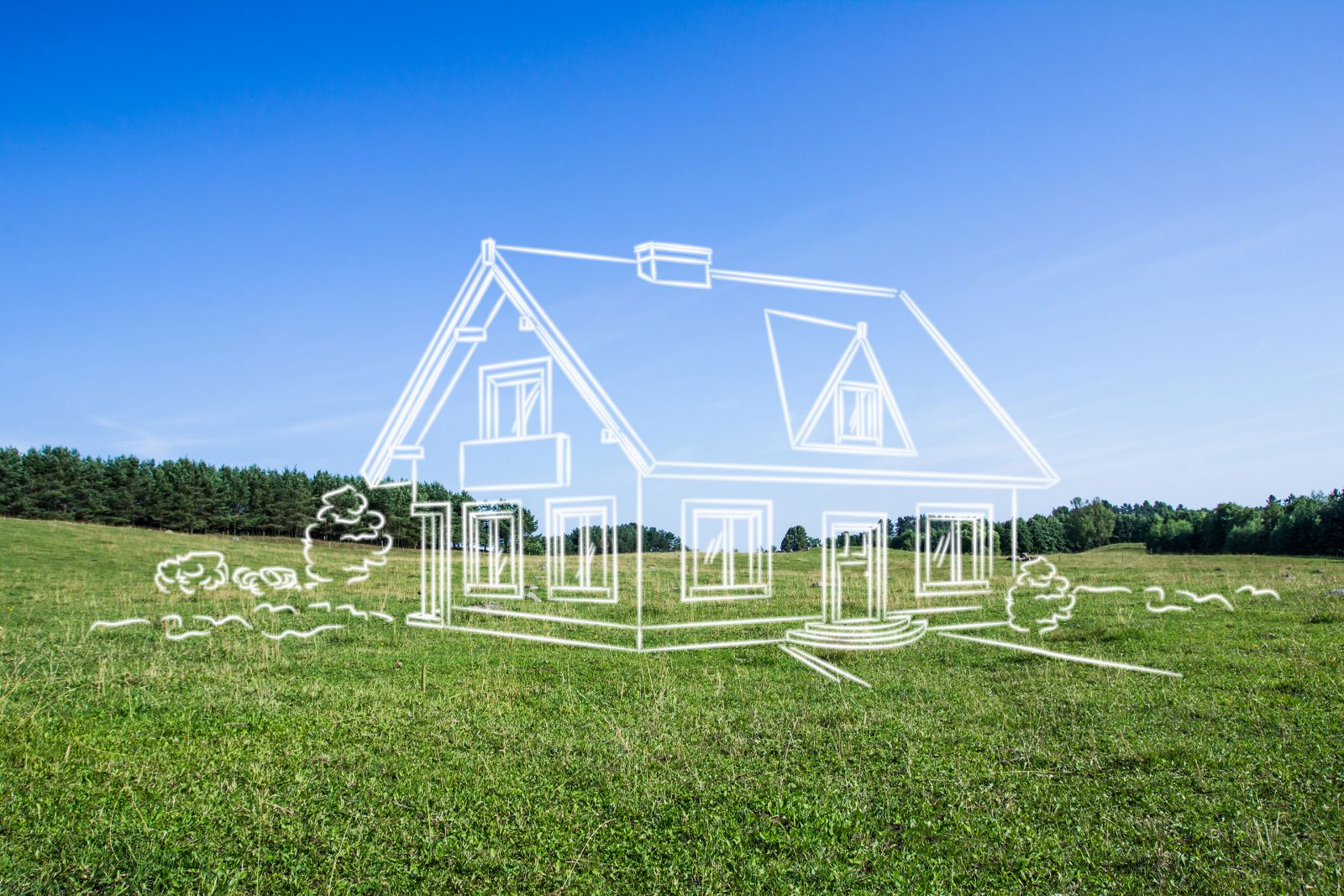
image of draft of a house on raw land purchased with a raw land loan

Advantages of Taking a Land Loan 

Land loans offer several advantages for individuals who need more time to build on their purchased land. These advantages include:

  1. Flexibility: Land loans provide the flexibility to secure land for its potential, such as in areas with upcoming business opportunities or future development. You can hold the land until the timing is right for your construction project.
  2. “Blank Canvas”: Acquiring land before any construction allows you to start with a “blank canvas.” You can envision and create your dream home or commercial space according to your preferences and needs.
  3. Transition to Construction Loan: When you’re ready to build, your land loan can be seamlessly integrated with a construction loan to finance the land purchase and construction costs. Ultimately, this can transform your land loan into a standard mortgage when you’re ready to move in.

Disadvantages of Taking a Land Loan 

Despite the advantages, land loans come with certain disadvantages, mainly due to the higher risks involved:

  1. Limited Lender Options: Lenders for land loans can be limited in number due to the inherent risks, which may limit your choices when selecting a lender.
  2. Stricter Qualifications: To secure a land loan, you must meet more stringent qualifications than a standard mortgage.
  3. Higher Down Payments and Interest Rates: Land loans have higher down payment and interest rates than traditional mortgages. These additional costs are a result of the higher risks faced by lenders.

To mitigate these disadvantages, having a well-defined construction plan, including a set timeline and cost estimates, can increase your loan approval chances, is essential.

Land Loan vs. Other Land-Buying Options 

If you encounter difficulties meeting land loan qualifications, alternative methods exist to finance your land purchase. Some options cater to home-building purposes, while others are designed for commercial space.

  • SELLER-FINANCING 
    • Seller financing is where the seller acts as your lender in a land contract. This arrangement can be more flexible and suitable for those who may not meet traditional bank loan requirements. It’s essential, however, to engage an attorney to review the land contract to ensure clarity and prevent potential gray areas or loopholes.
  • HOME EQUITY LOAN 
    • Another method for purchasing land is through a home equity loan, where you receive a lower interest rate against your home’s equity. It’s important to note that defaulting on this type of loan could lead to the risk of losing your home.
  • HOME EQUITY LINES OF CREDIT
    • Home Equity Lines of Credit (HELOCs) provide a flexible way to access funds over a specified timeframe using your home’s equity. You can use a HELOC as a down payment for a land loan and repay the HELOC amount and interest.
  • USDA LOAN 
    • The USDA offers a land and construction loan designed for low to moderate-income families planning to build a home in a qualified rural area. This option can particularly benefit those seeking a more affordable land and home construction path.
  • SBA LOAN 
    • Small Business Administration (SBA) loans are available to assist small business owners in financing raw land and construction costs for commercial buildings. The SBA 504 loan program provides fixed-rate financing with a 10% down payment, 40% loan financing through the Certified Development Loan, and 50% provided by a bank or credit union.
  • PERSONAL LOAN 
    • A personal loan can also finance your land purchase. While this approach can offer flexibility, it can have higher interest rates. You may also need to compare its shorter repayment periods with the rest.

Looking for a Land Loan? 

Securing a land loan can be more challenging than obtaining a standard mortgage. However, you can increase your chances of approval with proper preparation. A credit union consultant specializing in land financing can provide significant assistance in navigating the process and ensuring your specific needs are met when purchasing land. Explore your options and receive expert guidance by scheduling an appointment with us today.

Canopy Credit Union